

The Gross Domestic Happiness of Bhutan – 14 inspiring examples
Bhutan is a small kingdom squeezed between the two Asian giants, India and China. If you've been to Asia, you'll know how fast once-traditional countries can turn into semi-Westernized, semi-modernized societies, taking mainly the negative features of the Western world (such as traffic jams, pollution and processed food).
While he wondered how to tackle the issue back in 1972, the Bhutanese king Jigme Singye Wangchuck decided to start a development project in his country (which at the time was still somewhat medieval) in a more gentle way, preserving as much as possible of the ancient traditions of Bhutan. He introduced a batch of measures, including famously focusing on the Gross Domestic Happiness of the nation rather than using economic indicators to measure the country's success.
How is Bhutan's Gross Domestic Happiness measured?
Measuring the happiness of a nation is a subjective matter and is highly debatable, according to many economists. In Bhutan, they calculate it using indicators such as sustainable development, environmental protection, effective government, social justice and the preservation of traditions.
Still sound vague? Here are a few specific measures introduced in Bhutan over the past 40 years to help paint a picture of this small but bold Himalayan kingdom.

Göran Höglund (Kartläsarn)/Flickr
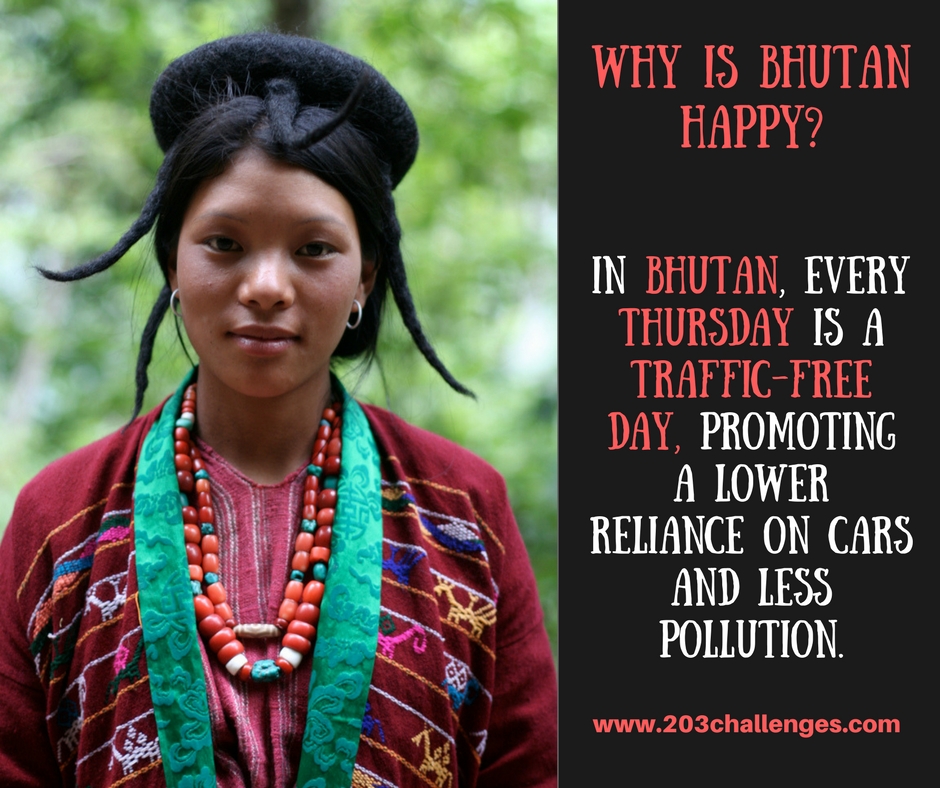
1. Every Thursday is a traffic-free day, promoting a lower reliance on cars and less pollution.
2. Until 1999, television was forbidden in Bhutan out of a concern it would be a channel for negative Western influence.
3. Bhutan has a Minister of Happiness.
Click to Post

203Challenges Team








Keine Verbindung
Verbindung wird wiederhergestellt
Etwas ist schiefgelaufen
Wir sind gleich wieder da